Auto repair: big tickets mean bigger cash back.
A $450 repair on a card means a bigger cut for your card company. With us, 20% of our cut comes back to you every month, without changing a thing about how you bill.
What a shop like yours gets.
A normal one runs about $60,000 a month on cards, with a $450 ticket. Your number will be different, and the call is where we work it out.
| Your card rate | Same as you pay now |
| Cash back, every month | 20% of our cut |
| What it costs | $24.99 a month |
| The terminal | Free, ready before it ships |
| Contract | None |
| Your exact number | On the call, in writing |
Every card company keeps a cut of your sales. We send 20% of our cut back to you, every month. The more you run on cards, the bigger it gets. You still pay the card fee on refunds, at your matched rate. That is the same cost you pay today.
What about deposits and parts ordered by phone?
Every owner in your trade asks it. Here is the straight answer.
The terminal holds the card when the car comes in and charges it when the work is done. So the deposit and the final bill are one job, not two. Parts paid over the phone run through the same system. If the job grows halfway through, that is fine. The card is charged once, at the final number.
What we would put on your counter.
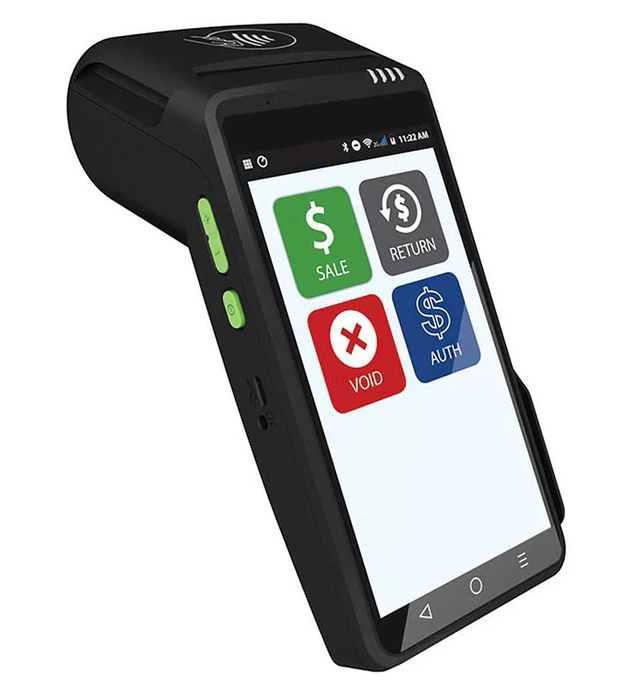
Holds a card at drop-off and charges it at pickup, which is how a shop really bills. We pick it together on the call, and whichever one is right for you is the one that is free.
Dejavoo QD4
Big countertop touchscreen with the tip prompt on screen.
- Runs your cash and card prices automatically
- Tip prompt right on the screen
- Prints receipts
- Plugs into your internet
Dual pricing, if you want it.
Some auto repair put a cash price and a card price on the tag. It is a second, optional program. Your cash back works the same way with it or without it, and we will tell you straight whether it fits your shop and your state.
Get your real number.
Twenty minutes with someone who sets up auto repair every week. The math is yours to keep either way.